If you love dining out, traveling, or shopping for groceries, you have likely looked into getting a premium cash back credit card. When researching top options, you might wonder how to prequalify for capital one savorone card without hurting your credit score. Fortunately, Capital One offers a risk-free pre-approval tool that lets you check your eligibility before committing to a hard credit check.
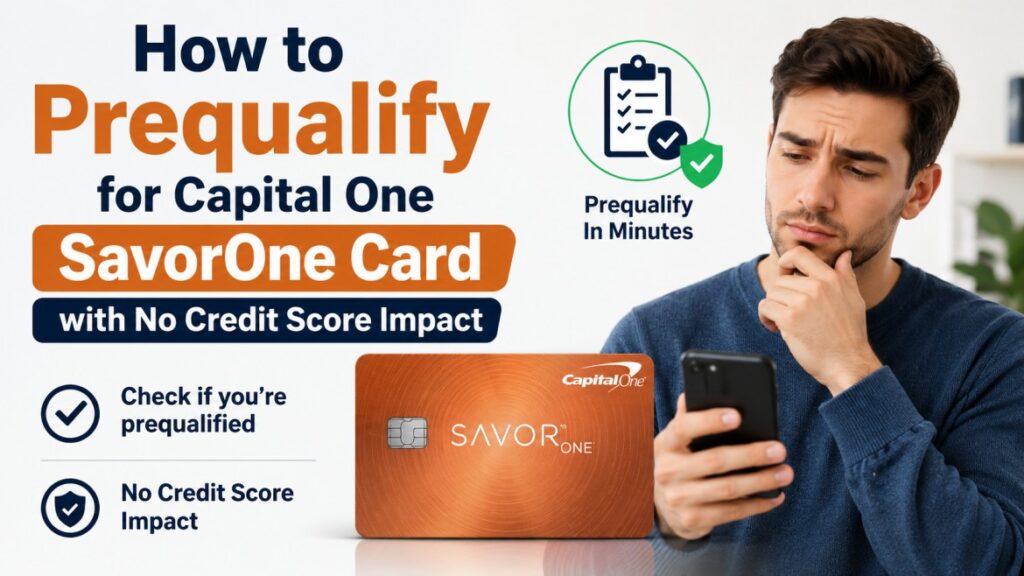
The Capital One SavorOne Cash Rewards Credit Card is widely considered one of the best cash back cards on the market, offering an unlimited 3% cash back on dining, entertainment, popular streaming services, and at grocery stores—all with no annual fee.
In this comprehensive guide, we will explain exactly how to prequalify for capital one savorone card online, outline the credit score requirements, detail the step-by-step pre-approval process, explain the cashback categories in depth, and provide tips to maximize your chances of approval.
What is Pre-Qualification? (Soft Pull vs. Hard Pull)
Before submitting your personal information, it is important to understand the technical difference between pre-qualification and a formal application. This understanding protects your credit health:
- Prequalification (Soft Inquiry): This is a preliminary screening where Capital One reviews a basic version of your credit report. A soft pull has zero impact on your credit score and is not visible to other lenders.
- Formal Application (Hard Inquiry): If you are pre-approved and decide to accept the offer, you will submit a formal application. This triggers a hard pull, which temporarily lowers your credit score by a few points.
By utilizing the pre-qualification tool first, you eliminate the risk of getting rejected and receiving a hard inquiry for a card you were not eligible to get.
SavorOne Cashback Categories Explained in Detail
To ensure you get the most out of your card once approved, it helps to understand what purchases qualify for the unlimited 3% cash back rate:
- Dining: This includes sit-down restaurants, fast-food chains, cafes, bars, lounges, bakeries, and food delivery services (like UberEats or DoorDash).
- Entertainment: This covers ticket purchases at movie theaters, sports stadiums, theatrical performances, amusement parks, tourist attractions, aquariums, and zoos. Note: Tickets purchased through third-party resellers may only earn 1%.
- Popular Streaming Services: Includes subscriptions to major platforms such as Netflix, Hulu, Max (HBO), Disney+, and Spotify. Cable and satellite TV services are excluded.
- Grocery Stores: Includes supermarkets and local grocery markets. Crucially, superstores like Walmart and Target, as well as wholesale clubs like Costco or Sam’s Club, are excluded from the 3% category and will only earn 1%.
Eligibility: What Credit Score is Needed for the SavorOne?
Capital One offers different versions of the SavorOne card depending on your credit profile. Knowing which tier you fall into will help you understand your pre-approval results:
| Card Version | Target Credit Rating | Required Credit Score Range | Annual Fee | Signup Bonus? |
|---|---|---|---|---|
| SavorOne for Excellent Credit | Excellent | 720 – 850 | $0 | Yes ($200 cash bonus) |
| SavorOne for Good Credit | Good | 670 – 719 | $0 | No |
| SavorOne for Students | Fair / No Credit | 600 – 669 (Students) | $0 | Yes ($50 cash bonus) |
NOTE: If you are currently enrolled in a college, university, or trade school, the SavorOne for Students is highly recommended. It offers the exact same 3% cashback categories as the premium card but has much lower credit score requirements, making it an excellent starter card for young adults.
Step-by-Step Guide on How to Prequalify for Capital One SavorOne Card
The online pre-qualification process is secure, straightforward, and takes less than three minutes to complete. Follow these exact steps:
Step 1: Visit the Capital One Pre-Approval Portal
- Open your web browser and navigate to the official Capital One website: capitalone.com.
- Go to the “Credit Cards” section in the main menu.
- Click on the link that says “See if You’re Pre-Approved” or “Pre-Approve Me”.
Step 2: Input Your Personal Details
You will need to provide basic identification data to allow Capital One to locate your credit report:
- Your full legal name, date of birth, and Social Security Number (SSN) or Individual Taxpayer Identification Number (ITIN).
- Your physical residential address (P.O. Boxes are not accepted for verification).
Step 3: Enter Your Financial Information
Capital One uses this data to assess your ability to make monthly payments (debt-to-income ratio):
- Employment Status: Employed, self-employed, retired, student, or unemployed.
- Total Annual Income: Include your base salary plus any secondary income sources (e.g., bonuses, investments, child support, or retirement benefits).
- Monthly Housing Payment: Your monthly rent amount or mortgage payment.
Step 4: Submit and View Your Personalized Offers
- Agree to the terms and click “Submit”.
- Within 60 seconds, the system will run a soft pull on your credit report.
- If you qualify, the SavorOne card will appear on your screen as a recommended offer.
- If you decide to proceed, click “Apply Now” to submit the formal application (which will trigger a hard credit check).
What to Do If You Are Not Pre-Approved?
If the pre-approval tool does not show the SavorOne card among your offers, do not despair. It simply means your credit profile does not currently fit Capital One’s risk model. Follow these steps to improve your chances for next time:
- Review Your Credit Report: Go to AnnualCreditReport.com and pull your free credit reports from Equifax, Experian, and TransUnion. Check for any reporting errors, late payments, or unauthorized accounts.
- Check the Adverse Action Notice: By law, if a lender rejects your credit application or pre-approval request, they must provide an explanation. Capital One will send you an email or letter outlining the exact reasons (e.g., “high credit utilization” or “insufficient credit history”).
- Apply for a Secured Card First: If your credit score is under 600, you may need to build your score using a secured card, like the Capital One Platinum Secured, for 6 to 12 months before trying again for the SavorOne.
Pro-Tips to Increase Your Prequalification Odds
If you want to ensure the SavorOne card appears in your pre-approval offers, implement these financial habits before applying:
- Lower Your Credit Utilization: Keep your outstanding credit card balances below 30% of your total limits (ideally below 10%) for at least 30 days before checking your pre-approval status.
- Clear Outstanding Collections: Ensure you have no active disputes or unpaid collection accounts on your credit report.
- Keep Inquiries Low: Avoid applying for other loans or credit cards for at least 90 days before checking your SavorOne pre-approval status.
Frequently Asked Questions (FAQs)
How to prequalify for capital one savorone card?
To prequalify, visit the official Capital One pre-approval portal online, fill out the short form with your personal and financial details (name, SSN, income, housing costs), and submit it. The system will perform a soft credit check and show your eligible offers within seconds.
Does Capital One pre-approval guarantee I will get the card?
No. While a pre-approval indicates a very high likelihood of acceptance (around 90%), it is not a legal guarantee. Capital One will perform a final review of your credit file during the hard inquiry, and if they find new negative marks or income discrepancies, they can still deny your application.
Will checking my pre-approval status lower my credit score?
No. Checking your pre-approval status only triggers a soft inquiry on your credit report. Soft inquiries are completely invisible to other lenders and have no impact on your FICO or Vantage credit scores.
What is the starting credit limit for the SavorOne card?
The starting credit limit varies based on your income and credit score. Typically, applicants approved for the “Excellent Credit” version receive a starting limit of 1,000to1,000to5,000, while the “Good Credit” and “Student” versions may start around 500to500to1,000.