Losing a job or experiencing a sudden reduction in work hours can create severe financial stress for individuals and families across the United States. During transitions between employment, state and federal safety net programs provide essential financial stability to help cover housing, groceries, healthcare, and utility expenses.
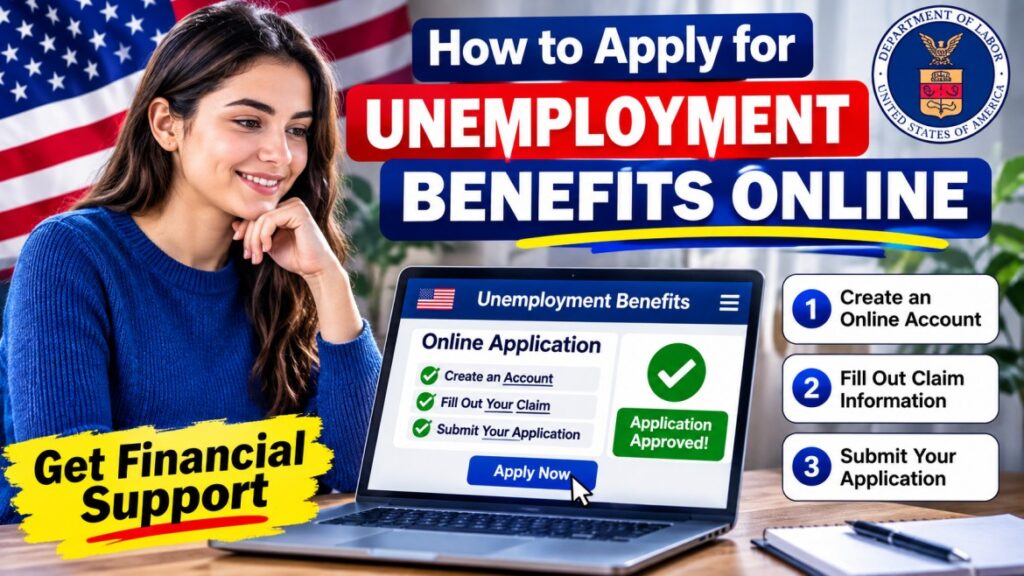
The primary safety net program for out-of-work Americans is Unemployment Insurance (UI). Funded by employer taxes and administered jointly by the US Department of Labor and individual state workforce agencies, unemployment insurance provides temporary, non-repayable weekly cash payments to eligible workers while they actively seek new employment.
Because filing an initial claim online is significantly faster than waiting on telephone hold lines or visiting physical unemployment offices, submitting your application digitally is the best way to avoid payment delays.
In this comprehensive guide, we cover core unemployment eligibility requirements, required documentation, step-by-step online filing instructions, and a state-by-state contact directory featuring official labor department portals.
Core Eligibility Requirements for US Unemployment Insurance
While specific regulations vary slightly between US states, all state unemployment programs operate under baseline federal guidelines established by the US Department of Labor.
To qualify for weekly unemployment compensation, an applicant must meet three primary criteria:
1. Separation Through No Fault of Your Own
You must be unemployed due to reasons beyond your personal control. Standard qualifying scenarios include:
- Company layoffs or corporate downsizing.
- Business closures or severe reductions in operating hours.
- Completion of a seasonal or temporary employment contract.
- Constructive discharge due to unsafe working conditions or dramatic, unagreed pay cuts.
Note: Individuals who quit voluntarily without good cause or who were terminated for documented gross workplace misconduct are generally ineligible for benefits.
2. Base Period Earnings Thresholds
To qualify for financial aid, you must have earned a minimum amount of wages during a specific 12-month timeframe known as the Base Period.
In most states, the standard base period consists of the first four of the last five completed calendar quarters prior to the date you file your initial claim. State algorithms calculate your Weekly Benefit Amount (WBA) based on your highest-earning quarter within that base period.
3. Ability and Availability to Work
To maintain eligibility, you must be physically able to work, available for immediate full-time employment, and actively conducting a verifiable job search each week.
Documents You Need Before Starting Your Online Application
To prevent processing holds or system rejections, gather the following paperwork before logging into your state’s online unemployment portal:
- Personal Identification: Your Social Security Number (SSN), legal name, date of birth, and driver’s license or state-issued photo ID.
- Work Authorization: Alien Registration Number or work permit documentation if you are not a US citizen.
- 18-Month Work History: Full legal company names, corporate addresses, telephone numbers, and manager contact details for every employer you worked for during the past 18 months.
- Exact Employment Dates: Accurate start and end dates for each job, along with the precise reason for your separation.
- Bank Account Details: Bank routing number and checking/savings account number to set up direct deposit payments.
Step-by-Step Guide to Applying for Unemployment Online
Filing your claim online typically takes between 30 and 45 minutes when you have your documentation prepared.
Step 1: Access Your State’s Official Labor Portal
Navigate to your state’s official Department of Labor or Employment Security Department website. Always verify that the website URL ends in .gov to ensure you are using an official, secure state portal rather than a third-party scam site.
Step 2: Create a Secure Claimant Account
Most modern state unemployment portals utilize centralized identity verification systems (such as Login.gov or state single sign-on portals). Create your user profile, verify your email address, and set up multi-factor authentication (MFA).
Step 3: Complete the Initial Unemployment Claim
Fill out the online application completely, entering your personal details, residential address, base-period earnings, and 18-month work history. Be completely honest when detailing the reason for your job separation, as state agencies cross-check your statements directly with your former employer’s human resources department.
Step 4: Choose Your Payment Method
Select your preferred payment delivery option. Most states offer Direct Deposit straight into your personal checking or savings account, or a pre-loaded State Prepaid Debit Card (such as a ReliaCard or Way2Go Card) mailed to your home address.
Step 5: Submit Claim and Save Confirmation
Review all entries for accuracy before clicking submit. Once submitted, save or print your Claim Confirmation Number and initial monetary determination letter for your personal records.
State-by-State Unemployment Directory & Online Portals
Because each US state manages its own unemployment portal and phone system, use the directory table below to access official state portals:
| State | Official State Agency Name | Toll-Free Phone Number | Official Online Application Portal |
|---|---|---|---|
| California | Employment Development Dept (EDD) | 1-800-300-5616 | edd.ca.gov/unemployment |
| Texas | Texas Workforce Commission (TWC) | 1-800-939-6631 | twc.texas.gov |
| Florida | Florida Commerce (Reemployment) | 1-833-358-0835 | floridajobs.org |
| New York | NY Department of Labor (DOL) | 1-888-209-8124 | dol.ny.gov/unemployment |
| Pennsylvania | PA Dept of Labor & Industry | 1-888-313-7284 | uc.pa.gov |
| Illinois | IL Dept of Employment Security | 1-800-244-5631 | ides.illinois.gov |
| Ohio | Dept of Job and Family Services | 1-877-644-6562 | unemployment.ohio.gov |
| Georgia | Georgia Department of Labor | 1-870-308-2900 | gdol.ga.gov |
| Michigan | Unemployment Insurance Agency | 1-866-500-0017 | michigan.gov/uia |
| North Carolina | Division of Employment Security | 1-888-737-0259 | des.nc.gov |
How Weekly Benefit Certifications Work
Submitting your initial claim is only the first step. To receive weekly cash disbursements, you must complete a Weekly Benefit Certification (sometimes called weekly claim filing) for every week you remain unemployed.
Weekly Certification Checklist:
- Log In Weekly: Log into your state portal every Sunday or Monday to certify the previous week.
- Report Earnings: Report any part-time, freelance, or temporary earnings made during the week (gross income before taxes).
- Log Job Contacts: Record the names, dates, and contact methods of companies you applied to during the week, as state audits require proof of active work search.
- Confirm Availability: Confirm that you were physically able to work and did not refuse suitable job offers during the certified week.
Frequently Asked Questions
How long does it take to receive your first unemployment check?
In most US states, it takes 2 to 3 weeks from the date you submit your initial online application to receive your first payment. Most states enforce an unpaid “Waiting Week” by law, meaning you will not receive payment for the very first week of your claim, though you must still certify for it.
Can I receive unemployment benefits if I was fired?
It depends on the circumstances of your termination. If you were fired due to a lack of skill, poor fit, or inability to meet performance quotas, you are generally still eligible for unemployment benefits. However, if you were discharged for documented gross misconduct (such as theft, unexcused absenteeism, or violation of written safety policies), your claim will likely be denied.
Are unemployment insurance benefits taxable?
Yes. Federal law considers unemployment compensation to be taxable income. When filing your claim online, you can elect to have 10% withheld automatically for Federal Income Tax, preventing a surprise tax bill at the end of the year.
Final Thoughts & Legal Disclaimer
Navigating job loss is challenging, but applying for unemployment benefits online provides crucial financial support while you secure your next career opportunity. By gathering your employment history, filing through official state portals, and maintaining weekly job search logs, you can protect your household finances.