The federal student aid landscape has experienced a massive shift. As of July 1, 2026, the Saving on a Valuable Education (SAVE Student Loan Program Ends) plan has officially ended, leaving millions of borrowers needing to transition to a new repayment plan. If you received an email from your servicer regarding the cancellation of your income-driven benefits, here’s what you need to know to protect your credit score and avoid sudden payment spikes.
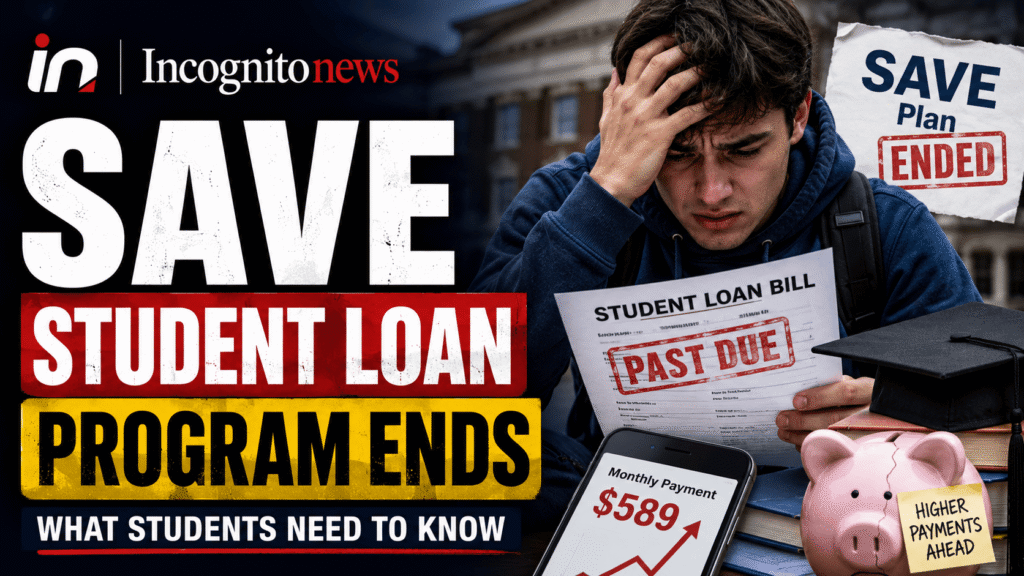
The termination of this popular program means borrowers must take proactive steps to transition to alternative payment plans, or risk being automatically enrolled in a plan that may not suit their financial situation.
The Cause of the Shutdown: Legal Battles and New Legislation
The end of the SAVE plan follows a complex series of legal battles and new federal legislation. The program, which was designed to offer some of the most generous income-driven repayment terms in history, had already been blocked in federal courts since 2024 amid legal challenges questioning its legality.
That legal uncertainty was resolved through two developments: the passage of the One Big Beautiful Bill Act (OBBBA) in 2025, which restructured federal student loan repayment options going forward, and a subsequent settlement agreement between the Department of Education and the state of Missouri in late 2025, which set the SAVE plan’s official wind-down in motion ahead of its original 2028 expiration date. As a result, the Department of Education began transitioning SAVE borrowers into alternative repayment plans starting July 1, 2026.
The Ninety-Day Transition Window
With the plan’s termination, loan servicers (such as Mohela, Nelnet, and Aidvantage) have begun sending transition notifications to affected borrowers. Once you receive your official notification, you generally enter a 90-day window to select a new repayment plan.
Because different servicers are processing these notifications at different speeds, there’s some confusion in mid-2026 regarding exact deadlines, with some borrowers reporting longer grace periods than others. Regardless of the specific date on your letter, monitor your account on the official Federal Student Aid website to make sure you don’t miss your specific window.
Repayment Alternatives: RAP, IBR, and Standard Plans
Borrowers previously on the SAVE plan now need to evaluate the remaining legal options for federal loan repayment.
1. The Repayment Assistance Plan (RAP)
As part of the 2026 overhaul under OBBBA, the government introduced the Repayment Assistance Plan (RAP) as the primary long-term replacement for income-driven relief.
Importantly, RAP is not a flat percentage — payments are calculated on a tiered scale of 1% to 10% of your adjusted gross income, depending on how much you earn. If your annual income is below $10,000, your payment is set at a flat $10 per month. For most borrowers coming from SAVE, this generally means a higher payment than what they were used to, since SAVE capped payments at $0 for many low-income earners. Forgiveness under RAP occurs after 30 years of qualifying payments.
2. Traditional Income-Driven Repayment (IDR) Plans
Borrowers with loans issued before July 1, 2026, still have access to older IDR plans, though these are being phased out over time:
- Income-Based Repayment (IBR): Caps payments at 10-15% of discretionary income (the exact rate depends on when your loan was disbursed)
- Pay As You Earn (PAYE): Caps payments at 10% of discretionary income, but is restricted to borrowers who took out loans after 2008
- Income-Contingent Repayment (ICR): Calculates payments at 20% of discretionary income, typically resulting in the highest payments among IDR options
Note: PAYE and ICR are being phased out and will no longer be available after July 1, 2028 — borrowers currently on these plans will need to switch to IBR or RAP before then.
3. The Standard Repayment Plan
If you don’t select a new plan before your transition window closes, your servicer will automatically place you on the existing Standard Repayment Plan, which divides your remaining balance into 120 equal monthly payments over 10 years.
Since this plan doesn’t factor in your income, this default option can cause a significant payment spike for lower-income borrowers who were previously paying little to nothing under SAVE.
Comparison Table: Key Repayment Options
| Repayment Plan | Payment Calculation | Eligibility | Forgiveness Timeline |
|---|---|---|---|
| Repayment Assistance (RAP) | 1% to 10% of income (tiered), $10 minimum | Available to all direct loan borrowers | 30 years |
| Income-Based (IBR) | 10-15% of income | Must demonstrate financial hardship | 20-25 years |
| Pay As You Earn (PAYE) | 10% of discretionary income | Restricted to borrowers from 2008 onward | 20 years |
| Standard Plan (Default) | Fixed monthly payments | Open to all borrowers automatically | No forgiveness |
How to Avoid Automatic Standard Plan Enrollment
To prevent your monthly payment from increasing unexpectedly, take these steps:
- Log into your account on the official Federal Student Aid website to confirm your loan servicer details
- Use the Loan Simulator tool on the site to compare your expected monthly payments under RAP, IBR, and the Standard Plan based on your current income
- Submit your new IDR application through the portal before your 90-day window closes
Once submitted, your account is typically placed in temporary administrative forbearance while your servicer processes the paperwork, which protects you from late payments during the transition.
Frequently Asked Questions
What happens now that the SAVE plan has ended?
You can apply for the new Repayment Assistance Plan (RAP) or choose from remaining traditional options like Income-Based Repayment (IBR). You’ll need to submit your application within your servicer’s specified window to avoid automatic enrollment in the Standard Repayment Plan.
What happens to my progress toward Public Service Loan Forgiveness (PSLF)?
Your past qualifying payments made under SAVE should still count toward PSLF. To keep earning credit going forward, though, you’ll need to move to another qualifying plan, like IBR or RAP, since the Standard Plan doesn’t count toward PSLF.
Why are different borrowers reporting different transition deadlines?
Servicers are processing millions of accounts in waves, so notification letters are going out over several weeks. Your personal 90-day window begins only once your specific servicer contacts you.
Can I stay on SAVE if my income is very low?
No. The SAVE plan has been fully discontinued regardless of income level. Even borrowers with a $0 monthly payment under SAVE need to select a new plan, such as IBR or RAP.
What if my new plan application is stuck in processing?
Contact your servicer to confirm your account has been placed in administrative forbearance. This temporary status is meant to protect you from missed-payment penalties while your application is pending.
Disclaimer: Student loan regulations, interest rates, and repayment terms are managed by the Department of Education and are subject to legislative changes. This guide is for informational purposes only and does not constitute official financial or legal advice. Always confirm current details directly with your loan servicer or studentaid.gov.